
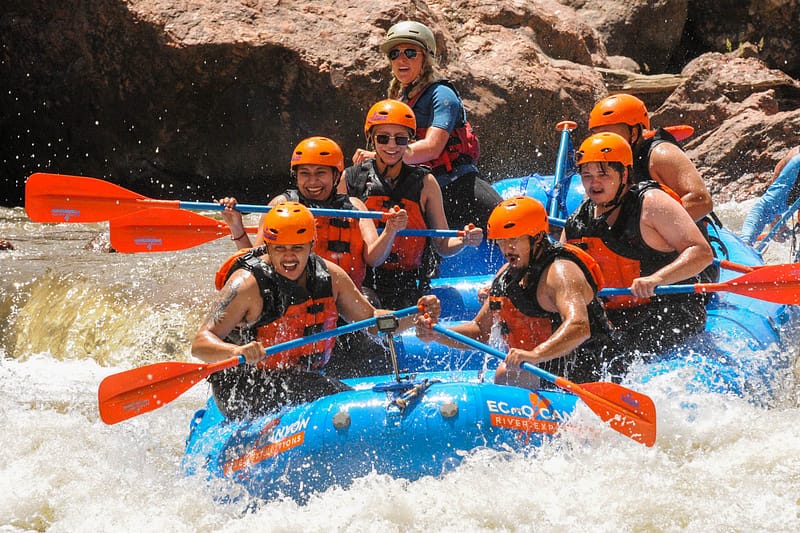
Colorado’s exciting whitewater scene may feel seamless and smooth today, but it didn’t necessarily start out that way. The strict rafting regulations enthusiasts rely on today (e.g., helmets, sweep kits, and guide training) are the direct result of decades of refining and many different outfitters comparing notes after long days out on the river.
That said, we at Echo Canyon River Expeditions (Raft Echo) weren’t just along for the ride. We actively helped steer the conversation as far as today’s rafting laws. Let’s take a closer look at how the evolution of rafting safety standards in Colorado has impacted how whitewater enthusiasts approach rafting adventures, safety, and more.
The Early Days of Rafting Regulations in Colorado
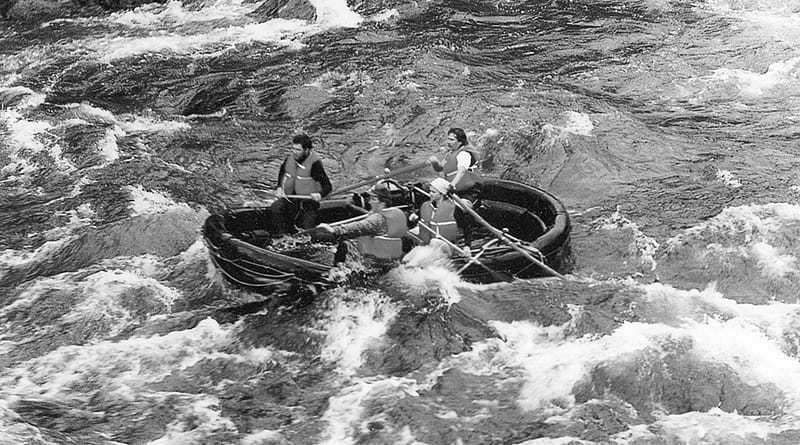
The early days of rafting were a mix of enthusiastic guides, gear that would probably make today’s outfitters wince, and a general willingness to “figure it out when you get there.” In other words, the newness of the sport meant there wasn’t much in place as far as formal regulation.
But as rafting continued to take off, it became increasingly clear that the “figure it out when you get there” method wasn’t sustainable. This was especially the case with more guests, more riverside traffic, and increasingly complex Colorado whitewater rafting trips to manage every season.
During the ’70s, the Colorado River Outfitters Association (CROA) stepped in to raise the bar and get outfitters on the same page. By the ’80s and ’90s, you were seeing changes like standardized Echo Canyon rafting safety briefings, higher equipment expectations, required life jackets, and polished river-use management systems.
And the industry keeps evolving, as rafting remains a young sport with developing best practices. When the industry on the whole discovers a better way to approach something, revised regulations tend to follow, and that’s as it should be.
Raft Echo's Impact on Regulatory Evolution
Raft Echo has always prided itself on not being just any outfitter. We don’t just meet the rules. We actively push the rest of the whitewater river community toward increasingly better ones.
Helmets on Class III and above
One of Raft Echo’s biggest moments came in 2010 when we advocated for mandatory helmets on all Class III+ rapids on the Arkansas River. We saw firsthand what a difference it would make, and the standard caught on fast, with over 50 outfitters adopting it. This standard is now also widely expected across the state.

Sweep kits built for real emergencies
Colorado’s required emergency gear list used to be fairly minimal, but Raft Echo wasn’t satisfied with that. We believed in sweep kits that included more repair tools, rescue resources, and medical supplies than the state actually lists. Our approach eventually raised standards for what Echo Canyon rafting safety preparedness actually looks like in practice.
Guide training that goes well beyond state requirements
Colorado requires around 50 hours of on-river training for guides, but our guide school calls for closer to 500. That’s months of hands-on experience with hydrology education, safety drills, scenario training, and more.
We’ve also proudly spearheaded efforts to place AEDs and backboards at multiple strategic points along the river through the Arkansas River Outfitter Association (AROA).

Navigating Current Colorado Rafting Regulations
Today, Colorado’s rafting rules are much clearer, as well as fully designed to keep adventure seekers safe without curbing any of the fun. If you’re heading out on the water soon, here are a few to know:
- USCG-approved PFDs (Type III or better) are must-haves for everyone.
- Valid park passes or day-use Colorado rafting permits are mandatory when accessing the river.
- You’re required to carry both a first-aid kit and a communication device (either radio or phone) on every commercial trip.
- In accordance with one of the rules Raft Echo helped bring to fruition, helmets are required on all Class III+ sections of the Arkansas River.
At Echo Canyon, we not only meet these standards but exceed them. Expect exceptionally trained guides, meticulously maintained equipment, and safety briefings that keep guests prepared without being overwhelming.


Plan Your Next Adventure with Safety and Fun in Mind
Although Colorado rafting regulations may feel more behind-the-scenes, they are part of what makes today’s whitewater adventures so reliably safe and fun. Raft Echo is incredibly proud to have helped build that foundation in ways that benefit every rafter who touches the Arkansas River.
Ready to experience Colorado’s rivers like a pro? Connect with our rafting specialists and plan a safe, unforgettable journey.
