
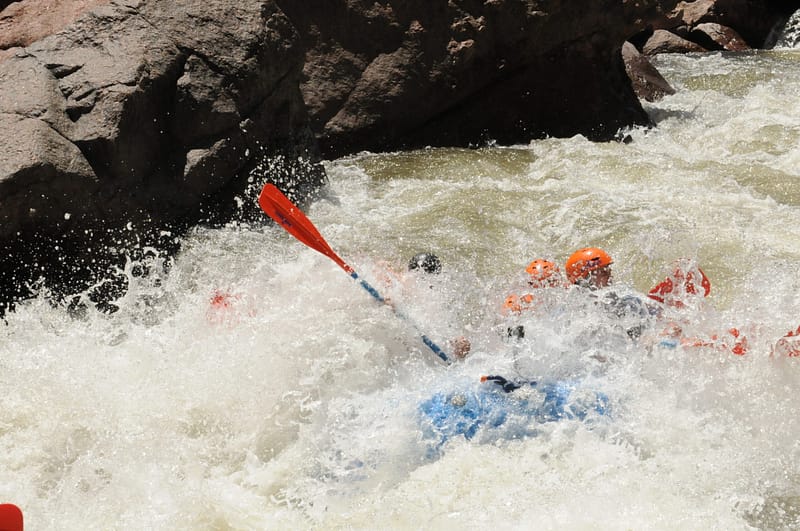
Sledgehammer. Boat Eater. Wallslammer. Before you ever dip a paddle into the Arkansas River, those names alone get your heart pounding. They sound intense, intimidating, and that’s exactly the point. A marketing team doesn’t dream up rapid names on Colorado rivers. They come from the river itself: its features, its force, and the generations of guides who’ve navigated every twist and drop. The story behind each name usually mirrors what the rapid actually feels like, and knowing those stories makes the experience that much richer when you’re riding through them.
How Rapids Earn Their Names on Colorado Rivers
Rapid naming is a tradition as old as river running itself. When early paddlers made first descents down stretches of whitewater, they named rapids based on what they saw, felt, and sometimes crashed into. A massive boulder, a narrow chute, an aggressive hydraulic, the way the water moves through a particular stretch of canyon: all of these shape a rapid’s identity and, eventually, its name.
Guides play a huge role in this tradition. After running the same section of river hundreds of times, they develop an intimate relationship with every wave, hole, and eddy. That knowledge gets passed down, and the names stick because they serve a real purpose. When your guide tells you Wallslammer is coming up next, you don’t need a technical briefing to understand what’s at stake. The name does the heavy lifting, building anticipation and giving your crew a mental picture of what’s ahead.
This naming culture is part of what makes whitewater rafting more than just a ride down the river. It connects you to the history and character of the waterway, and it transforms each rapid from an obstacle into a story.
The Stories Behind Sledgehammer and Boat Eater
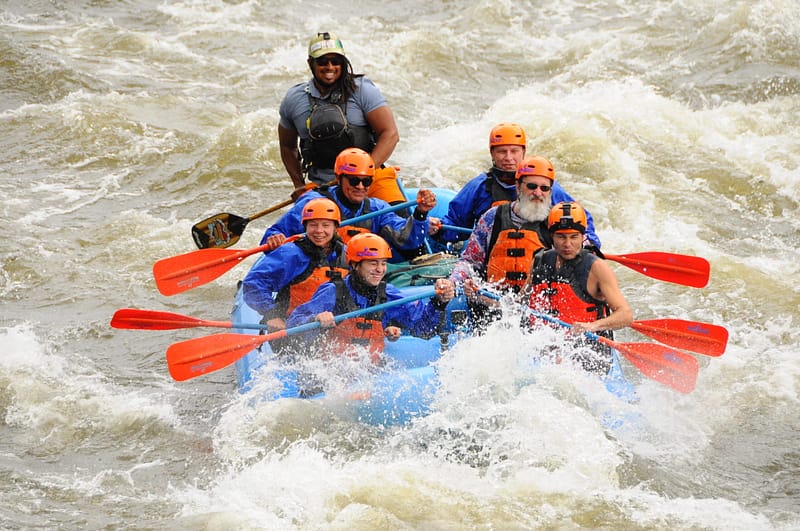
Two of the most iconic rapids in the Royal Gorge section of the Arkansas River are Sledgehammer and Boat Eater. Both are Class IV rapids that live up to their names in different ways, and both are highlights of any Royal Gorge rafting adventure with Echo Canyon River Expeditions.
Why Sledgehammer Hits So Hard
The name Sledgehammer instills a certain kind of fear and excitement the moment your guide announces it. That anticipation builds as you float closer, the roar of the rapid growing louder downstream. The name actually comes from a large rock sitting river right above the rapid as you enter its first move, known as Sledge Hole. So technically, “Sledgehammer” refers to the rock formation, not the feeling of getting hit.
That said, when those big waves slam into your chest, it sure feels like a sledgehammer.
Sledgehammer is defined by powerful wave trains, speed, and technical moves that demand precise paddling. Water flow and seasonal conditions change the rapid’s personality throughout the season. During peak flows in June, Sledgehammer ramps up significantly, delivering some of the most intense whitewater in the entire Royal Gorge. Echo Canyon’s guides, with nearly 50 years on the Ark, know exactly how to read and run this rapid at every water level.
Why Boat Eater Rapid Has a Reputation
Boat Eater tends to make people nervous and excited in equal measure, and the experience you get depends heavily on the river’s flow. At moderate to lower water levels, Boat Eater is actually a straightforward, more fun than scary, rapid. But at higher flows, this rapid earns its namesake in dramatic fashion.
There’s a rock in Boat Eater that you raft right past at lower flows. As the water rises, that rock gets covered and transforms into a massive rooster-tail feature with ferocious energy churning in the middle of the river. The goal at high water is to scrape right past this beast, narrowly missing the wave while staring directly into its belly. That’s the kind of moment that makes experienced rafters come back season after season.
Beyond Sledgehammer and Boat Eater, the Royal Gorge is packed with rapids whose names tell their own stories. You can explore the full stretch on Echo Canyon’s interactive Arkansas River map to see where each one sits:
- Sunshine Falls carries a misleadingly calm name, but don’t let it fool you. This rapid delivers powerful drops that catch first-timers off guard.
- Wallslammer earns its name honestly. Miss your line, and you’ll understand exactly why it’s called Wallslammer when you hit the canyon wall.
- The Narrows runs through the narrowest section of the Royal Gorge, with canyon walls towering 1,000 feet overhead and only 20 feet of river width at the bottom. Three consecutive drops, each with its own character, make this one of the most intimate and thrilling stretches on the Arkansas River.


What Rapid Names Reveal About the Royal Gorge Rafting Experience
Rapid names preserve decades of river history, storytelling, and hard-earned knowledge. They set expectations, build energy in the boat, and connect you to the generations of paddlers who came before. Understanding the lore behind names like Sledgehammer and Boat Eater doesn’t just enhance anticipation. It deepens your respect for the river and the experience of running it.
That connection is exactly why rafting with experienced local guides matters. Echo Canyon’s team has been navigating the Royal Gorge since 1978, and they know every rapid by name, every feature by feel.
Ready to experience these legendary rapids for yourself? Explore Echo Canyon’s rafting adventures and plan your Royal Gorge adventure.
