
Looking back at the 2025 Colorado rafting season, the Arkansas River had a year worth talking about. This Colorado rafting review covers a new boulder that appeared in the Royal Gorge after a spring storm, something that hadn’t happened in decades. Tourism patterns shifted statewide, creating both challenges and unexpected benefits. And water management strategies helped offset a lighter snowpack, keeping rivers flowing when they might otherwise have struggled.
What does it all mean for rafters planning 2026 trips? There’s quite a bit to unpack from this season.
How Snowpack (or Lack Thereof) Shaped the Season
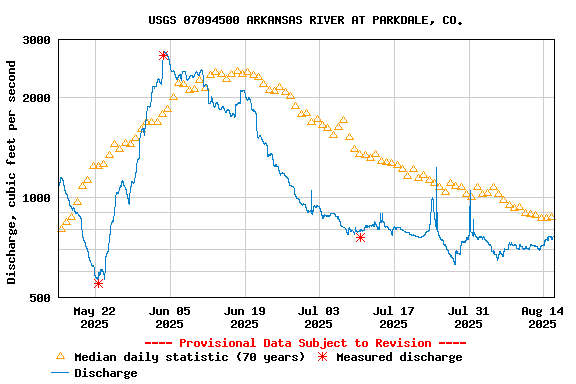
Winter 2024-2025 didn’t bring Colorado’s usual heavy snowpack, which had outfitters monitoring weather patterns nervously through spring. By March, it became clear this wouldn’t be a banner snow year. But the Arkansas River still performed well thanks to steady melt rates and strategic water management through the Voluntary Flow Management Program (VFMP). This coordinated approach kept rafting adventures going strong during peak season, which ended up being a relief for everyone in the industry.
The VFMP’s coordinated watershed approach proved its value this year. It stabilized river levels when natural snowmelt alone would’ve created significant challenges. Peak flows arrived on schedule in late May and early June, lasting through mid-July before beginning their gradual decline. USGS gauge readings near Cañon City showed flows between 1,200 and 2,500 CFS during prime months, solid conditions for both beginner trips and advanced expeditions. Those numbers tell a story of consistency that outfitters needed after worrying about water availability all winter.
The Rivers: Winners and Losers of 2025
The Arkansas River: Consistency (Plus One Big Surprise)
The Arkansas River delivered great experiences throughout the 2025 Colorado rafting season, particularly in the Royal Gorge and Browns Canyon sections. Guides reported consistent bookings and happy clients from May through September. But the standout moment came when a significant spring rainstorm sent a new boulder tumbling into the Royal Gorge, marking the first significant change in the Royal Gorge in 20 to 25 years. That kind of dramatic change doesn’t happen in rivers often.
The boulder runs cleanly at both high and low water levels, adding excitement without creating serious hazards. It’s positioned in a way that creates interesting hydraulics for rafters to navigate. Rivers constantly evolve and reshape themselves, sometimes gradually over years, sometimes suddenly during a single storm. This change kept experienced rafters engaged throughout the season. Even guides who’ve run the gorge hundreds of times found themselves adapting their lines and calling commands differently.
Browns Canyon maintained its reputation as a reliable Class III run throughout the season. The steady flows supported family trips and corporate groups from June through August, providing the kind of consistent experience that builds repeat business. When other sections struggled with lower water levels, Browns Canyon became the dependable go-to choice for outfitters.


Clear Creek and Friends: The Struggle Was Real
Clear Creek faced bigger challenges during the 2025 season. This drainage typically relies on early spring runoff rather than managed reservoir releases, and the lower snowpack hit it particularly hard. Many outfitters running Clear Creek and sections of the Upper Arkansas had to close by mid-August instead of extending into their usual late-season schedules through September. That early closure meant lost revenue and disappointed customers who’d planned late summer trips.
The difference between reservoir-supported rivers and those running purely on natural runoff became starkly apparent this year. VFMP-backed sections like the Arkansas maintained relatively consistent flows through the season, while natural runoff sections dropped to challenging levels much earlier than outfitters typically see. It’s a reminder that water management infrastructure plays a crucial role in Colorado’s rafting industry.
What This Season Taught Us (Besides "Book Early")
The 2025 Colorado rafting season brought unexpected tourism shifts that affected the entire industry. Statewide visitor numbers dropped noticeably compared to recent years, creating economic pressure for tourism-dependent businesses. Hotels, restaurants, and outfitters all felt the impact of fewer out-of-state visitors. But the flip side was more intimate river experiences with smaller crowds at popular launch sites. Groups didn’t have to compete as aggressively for prime time slots, and the overall river experience felt less rushed.
The new Royal Gorge boulder reinforced a key safety lesson that experienced guides emphasize constantly: rivers change, sometimes dramatically. Features that worked one way last season might behave completely differently this season. Guides adapted their approach to the new obstacle within days, demonstrating why experienced leadership and thorough safety briefings matter so much. You need people on the water who can adjust their strategy when conditions aren’t what they expected.
For anyone planning 2026 trips, the main takeaway is straightforward—book early. Early reservations secure better pricing and preferred dates while providing flexibility to adjust for changing flow conditions or weather patterns as the season approaches. Waiting until the last minute often means settling for whatever’s left.
Looking Ahead: Why 2026 Could Be Even Better
Colorado’s rivers proved their resilience during the 2025 season, staying dynamic and exciting even when conditions deviated from normal patterns. The Arkansas River’s strong performance showed that smart water management through the VFMP can effectively overcome lighter snowpack years. It’s not just about hoping for good snow—strategic planning and coordination make a real difference.
That new boulder in the Royal Gorge serves as a perfect symbol of why these rivers stay fresh year after year. There’s always something different to experience, some new challenge to navigate, even for rafters who’ve been coming back for decades. The river keeps evolving, and that constant change is part of what makes Colorado rafting special.
Connect with our rafting experts today to get personalized advice, insights, and tips for planning your next Colorado whitewater adventure.
